


June 29th, 2024: New research by Badlands Dinosaur Museum Paleontologists sheds light on the ancestry of Tyrannosaurus rex.
(Read the paper here, Free: https://t.co/3fjd08N75v)
Key findings:
-
Recent studies have disagreed as to the evolutionary relationships of Daspletosaurus and what it can tell us about Tyrannosaur evolution.
- Variation within and between Daspletosaurus species is best explained as the evolution of a single lineage
- Tyrannosaurus rex and other gigantic Tyrannosaurines descended from Daspletosaurus.
- Additional specimens are referred to the recently named Daspletosaurus wilsoni, including the ”Dinosaur Park Daspletosaurus”
- There is insufficient evidence for the coexistence of multiple Daspletosaurus species.

Contacts:
Primary Author: warshawelias [at] gmail.com (warshawelias[at]gmail[dot]com)Second author and illustrator: daniela.bee.gee.64 [at] gmail.com (daniela[dot]bee[dot]gee[dot]64[at]gmail[dot]com)Senior author and museum curator: Denver Fowler https://www.dickinsongov.com/museum-center/directory-listing/dr-denver-fowler
Background
The tyrannosaurid dinosaur Daspletosaurus roamed what is now the western United States and Canada 77 - 75 million years ago, predating T. rex by 10 million years. This genus has recently seen a dramatic increase in research interest from paleontologists, with two of its three species having been named in the last decade. Disagreement has centred around whether these species represent successive branching events or a single lineage evolving in place, as well as how closely related they are to T. rex.
Lineage towards the Tyrant Lizard
New research by Badlands Dinosaur Museum paleontologists analyzes the evolutionary relationships of tyrannosaurids and concludes that the three known Daspletosaurus species represent a single lineage directly ancestral to T. rex, with Daspletosaurus specimens looking more and more like the tyrant lizard king through time. This builds on hypotheses presented in the paper naming Daspletosaurus wilsoni, published in 2022 by the same team.
In the Late Cretaceous of North America, many dinosaur families are represented by multiple closely-related species. This high number of closely related species was previously thought to indicate standing diversity, which would be evidence of branching evolution, known as cladogenesis. However a better understanding of their placement in time has shown that none of these species coexisted, with evidence for these species finely separated in time from each other, forming consecutive ladder-like steps in a single evolutionary lineage where one ancestral species evolves directly into a descendant (anagenesis).
Instead of just being a cousin to Tyrannosaurus, Daspletosaurus is an ancestor to it. Studying Daspletosaurus is therefore a direct window into the evolution of Tyrannosaurus rex itself. The evolution of Tyrannosaurus was piecemeal, with many continuous characters evolving over millions of years, all observable within the Daspletosaurus lineage. Some of these characters include the deepening of the skull, a tall and narrow orbit, and the reduction of the hornlets around the eyes

Understanding phylogeny
A cladogram (also known as a phylogeny or phylogenetic tree) is a diagram which depicts the lines of evolutionary relationships of different species. A phylogenetic analysis is obtained by coding in hundreds of features and characteristics of individual species. The end result shows the relationships of the species within a group. Anagenetic lineages produce paraphyletic groups, with species in a phylogeny grading into one another.
Acceptance of a cladogenetic hypothesis for Daspletosaurus requires many assumptions, including several unsampled “ghost lineages” resulting from inferred splitting events. By contrast, an anagenetic hypothesis fits current evidence well without assuming the existence of unknown species or lineages. Future findings may further strengthen or disregard this hypothesis, but current evidence seems to indicate a single anagenetic lineage comprising known species of Daspletosaurus.
New specimens of Daspletosaurus wilsoni
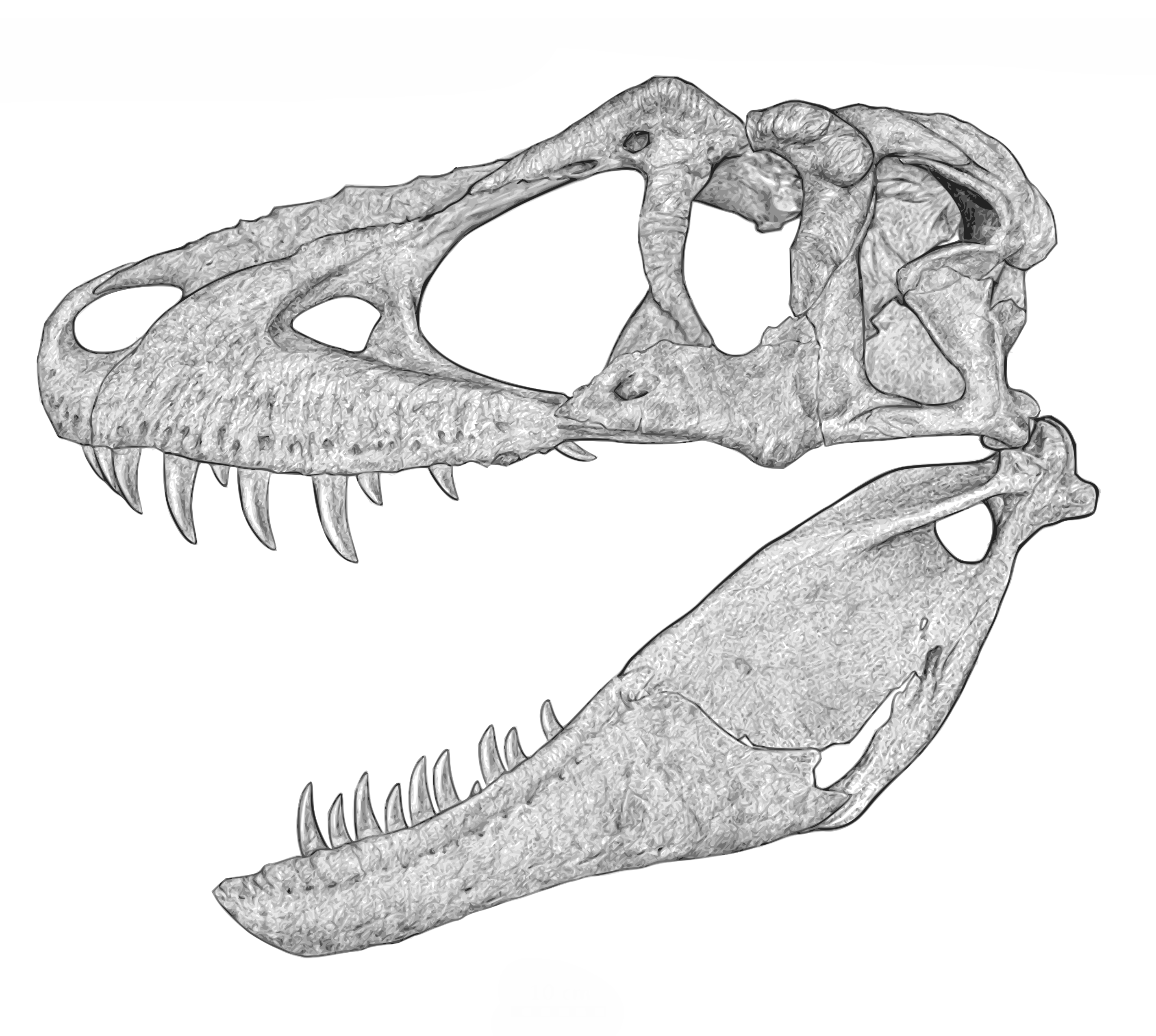
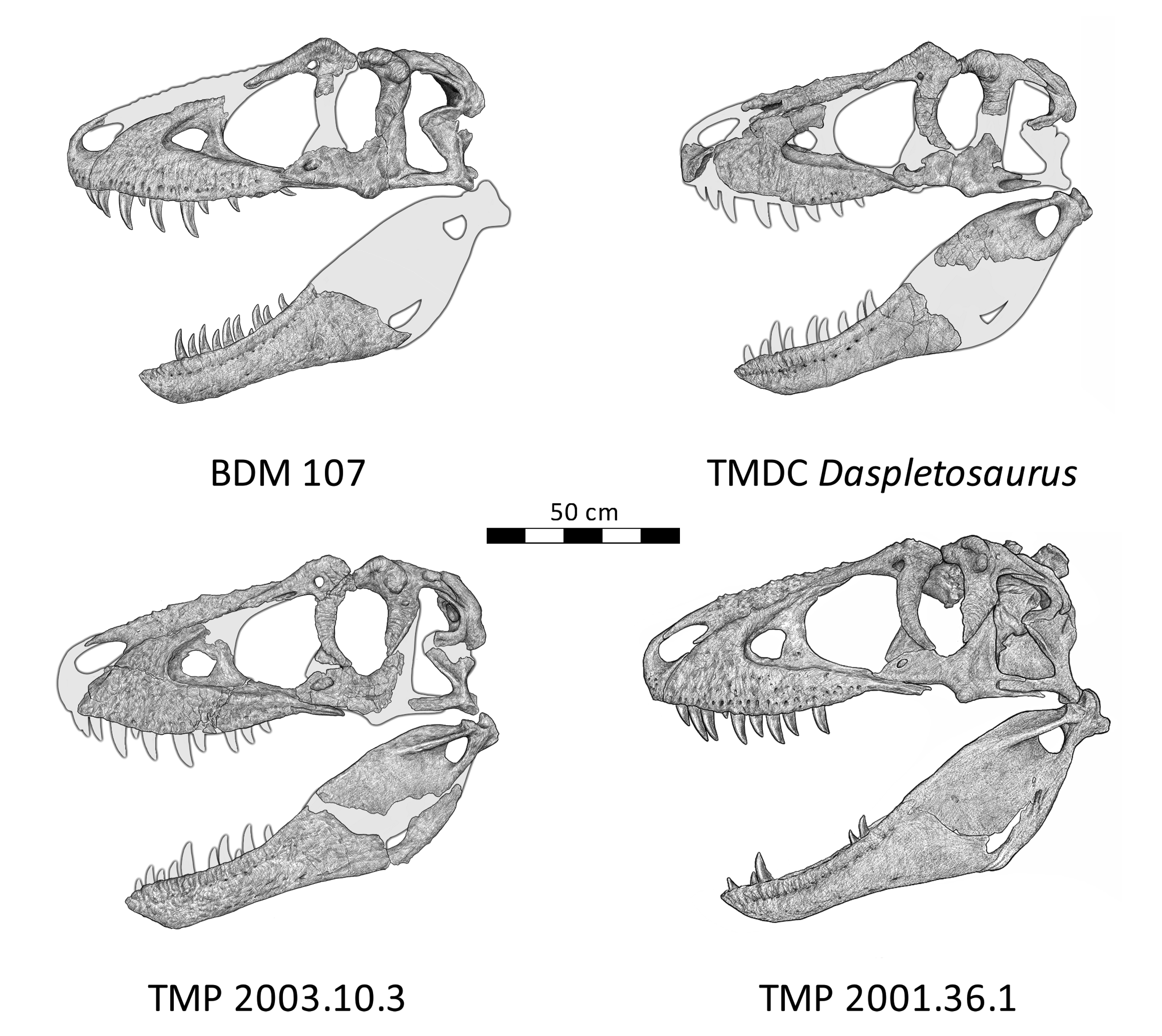
In addition to the holotype of Daspletosaurus wilsoni that was described and named in 2022 (BDM 107), new specimens of Daspletosaurus have been assigned to this species. These include: the “Dinosaur Park Daspletosaurus” specimen (TMP 2001.36.1) from Canada, the “TMDC Daspletosaurus” from Western Montana, and a second Canadian Daspletosaurus specimen (TMP 2003.10.3). None of these specimens were recovered with any autapomorphies (unique features), so all of their features were present in either D. torosus or D. horneri. All of these specimens (including the holotype of D. wilsoni, BDM 107) were recovered within an unresolved group between D. torosus and D. horneri. We referred them all to D. wilsoni based on a shared combination of ancestral and derived characteristics.
In contrast to previous studies, no stratigraphic overlap (coexistence) between Daspletosaurus species was found. Overlap recovered by previous studies was a result of inaccurate species IDs and misinterpretations of stratigraphic relationships between the Judith River, Oldman, and Dinosaur Park Formations.Additionally, Daspletosaurus specimens were recovered as paraphyletic at the base of Tyrannosaurini, indicating that Daspletosaurus was ancestral to T. rex.
Conclusions
Taken together, these results paint an exciting picture of Tyrannosaur evolution. Known Daspletosaurus species represent a single evolving lineage, which eventually gave rise to the common ancestor of Tyrannosaurus rex and other gigantic Tyrannosaurines
About the researchers
Elías A. Warshaw, Masters student at the University of Bristol, England; Research Associate at the Badlands Dinosaur Museum.
Daniela Barrera Guevara, Undergraduate student at Dickinson State University, North Dakota; Research Associate at the Badlands Dinosaur Museum and Benemérita Escuela Normal de Coahuila.
Dr. Denver W. Fowler, Curator of Badlands Dinosaur Museum, Dickinson Museum Center, Dickinson, North Dakota.
About the artist
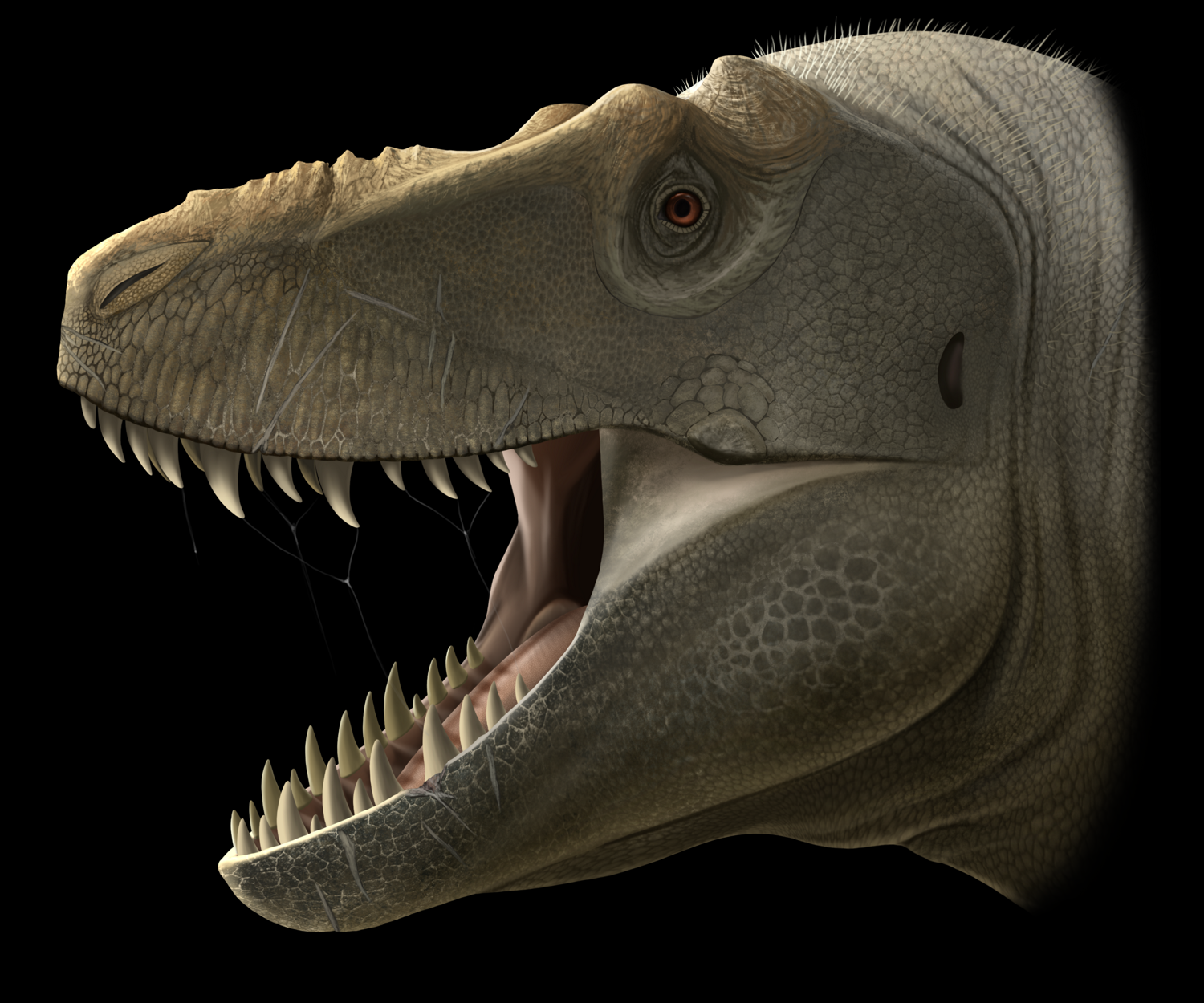
Head reconstructions by Gustavo Monroy, Mexican paleoartist and student at the National Autonomous University of Mexico, who creates digital illustrations. More of his work can be found on his Instagram (https://www.instagram.com/paleoart_by_g.monroy/) and Twitter (https://x.com/gmonroyb1) accounts.
Imagery: All images are provided here for publicity & media purposes or sharing on social media (click for full resolution).



Full Sized Imagery
For those in need of a larger-than-life version of any image gracing this page, simply direct your attention to the slideshow on the left. Once there, pinpoint the desired image, and with a right-click, select "Open Image in New Tab" for an expanded visual delight.